

What’s the difference between wedding celebrants and registrars?
If you are planning a civil wedding, the chances are you’ve come across wedding celebrants as an alternative to registrars.
Independent celebrants can be a great option to conduct your ceremony. But it’s important to understand the key differences between a registrar and a wedding celebrant.
A registrar can legally officiate your wedding during the civil ceremony at an approved venue. They’ll oversee the approval of your marriage license and make your union legally binding. On the other hand, a celebrant can’t legally marry you (except in Scotland), but they can create a beautiful, personalised ceremony for you anywhere you’d like.

Photo: River Lane Photography
Registrars
In England and Wales, a legal marriage must take place at an approved venue and be officiated by an approved person. For religious weddings, that means having your ceremony in a religious building like a church, with a member of the clergy. For civil weddings, your ceremony will be at a licensed civil marriage venue, officiated by a registrar.
If you want to have your legal ceremony on the same day and at the same location as your wedding reception, you would need registrars to do this. You book your registrars from the local authority in which your venue is located, and two registrars will attend your ceremony – one is the celebrant who conducts the ceremony, whilst the other officiates the paperwork. Unlike a celebrant, you don’t choose who the person that conducts your ceremony will be.
A common misconception about a registrar-led ceremony is that you don’t get to personalise your marriage ceremony. The only real restriction is you can’t include religious content (for example readings or songs). You choose your vows, music and readings. There’s also now an ‘enhanced ceremony’ option that allows for more customisation and can include symbolic additions such as knot tying. You will need to be on time for your ceremony, as the registrars will often need to leave promptly for their next wedding.
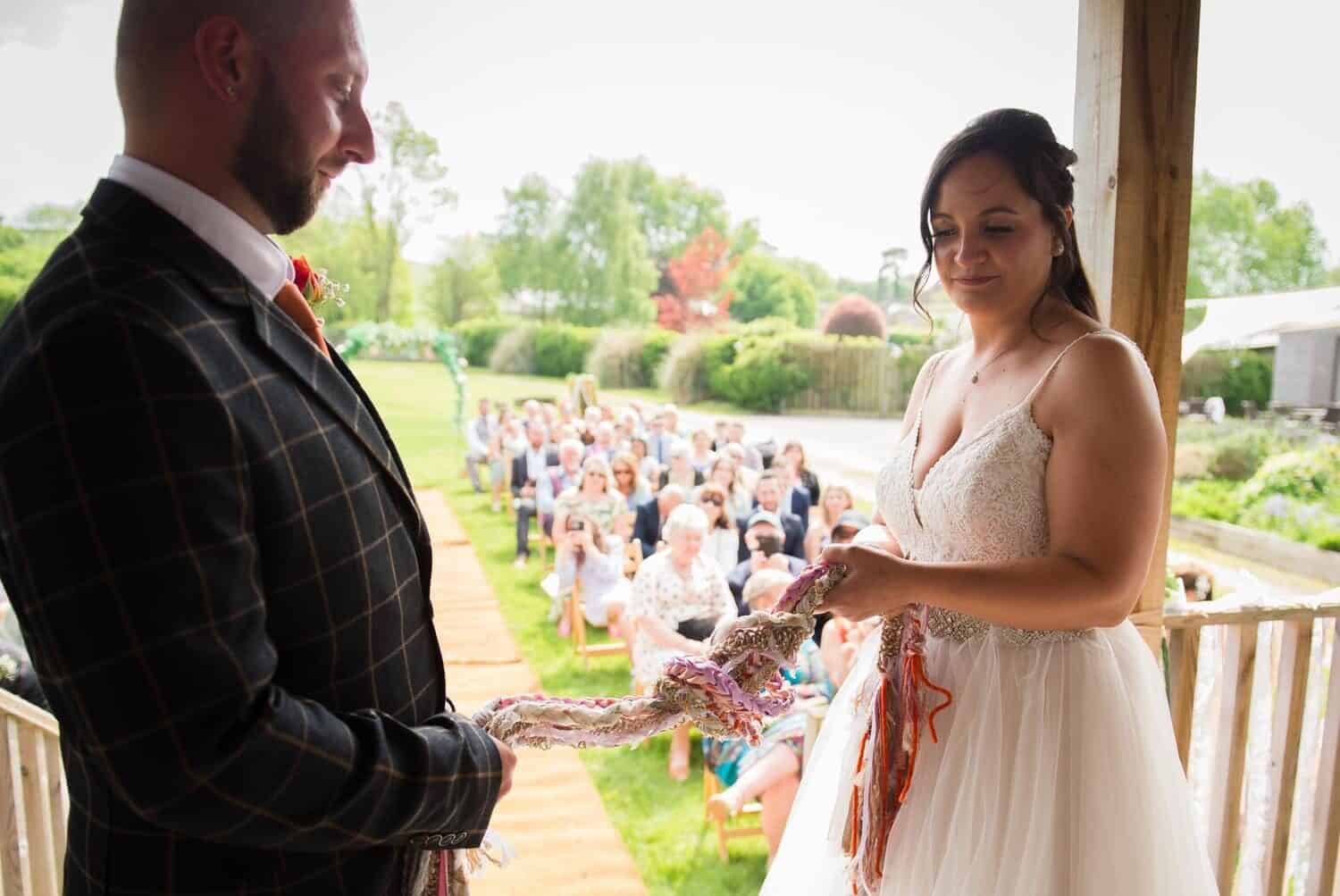
Photo: Lollipop Photography
Wedding celebrants
Celebrants have the advantage of being able to offer completely unique ceremonies in any location. Since the content of the ceremony is not bound by law, they can conduct the ceremony anywhere you choose and they usually only do one wedding per day, so you can pick a time that works best for you. There’s lots of choice, and you can choose the person you would like to conduct your ceremony. However, the downside is that celebrants cannot officiate legal ceremonies, so you’ll need to make your marriage official separately from the ceremony.
So if you choose to have a celebrant ceremony, you’ll need a separate legal ceremony with a registrar, typically on a different day at your local registry office or an approved premises.

Photo: The Barn at Cott Farm
Should you choose a registrar or celebrant for your wedding?
That’s up to you! Both celebrants and registrars offer personalisation options, and the costs are quite similar. If you want your wedding ceremony and reception to be on the same day at a licensed venue, registrars may be the best choice. But if your reception is at an unlicensed location, you’d prefer a more private legal ceremony without guests, or want very unique elements, a celebrant could be a better fit.
Celebrants, Registrars and Church Weddings Compared
| Celebrant | Registrars at an approved premises | Church (C of E) | |
| Personalised vows | Yes (no restrictions) | Yes (but must include certain legal wording) | Yes (but must include certain legal wording) |
| Readings | Yes | Yes | Yes |
| Personalised unity additions (hand joining, knot tying) | Yes | Yes (enhanced option) | Varies |
| Legal marriage | No | Yes | Yes |
| Costs (April 2025-2026 Saturday, Somerset) | Register office ceremony: £87 + Giving notice: £42 + Celebrant fee: £450 to £1000 | Ceremony at an approved ceremony (includes 2 x registrars and marriage certificate): £627 (classic) to £712 (enhanced) + Giving notice: £42 | Church ceremony (includes church hire, vicar and reading of banns): £600-750 |
| Other costs to consider | Venue fee | Venue fee | Marriage certificate (issued by/payable to register office) |